


Your Guide to Hosting Indoor Private Events
The best indoor private events do not feel confined. They feel intentional. A room can shift from a polished corporate reception to a high-energy sweet sixteen or an elegant wedding celebration when the layout, lighting, service, and entertainment all support the purpose of the gathering.
This guide to hosting indoor private events is designed for hosts who want more than a room with tables. Whether you are planning a mitzvah, milestone birthday, wedding reception, or company party, the goal is the same: create an experience that feels comfortable for guests and easy to manage from the first arrival through the final farewell.
Start With the Experience You Want Guests to Have
Before comparing menus, centerpieces, or entertainment options, decide how you want the event to feel. A formal seated dinner calls for a different room plan than a cocktail-forward networking event. A family celebration may need a clear dance floor and space for multiple generations, while a corporate gathering may need presentation capability, branded details, and areas where colleagues can talk without competing with the music.
The guest experience should guide every major decision. Consider when people will arrive, where they will naturally gather, what they need to see, and when the energy should change. For example, guests at a wedding reception may enter to a cocktail hour, move into a dining space, then transition to dancing. A strong venue plan makes those moments feel natural rather than crowded or confusing.
Guest count matters, but it is not the only measure of fit. Two events with 125 attendees can require very different amounts of usable space. A seated dinner with a band, dance floor, photo moment, and lounge seating has different needs than an open-house reception with passed hors d'oeuvres. Ask a venue how it can configure the room around your event format, not simply whether it can hold your number of guests.
Choose a Flexible Indoor Event Venue
A private event venue should make planning easier, not force your event into a preset format. Look for a space that can be arranged to suit the pace and personality of your occasion. Flexibility is especially valuable when your guest list is still changing or when one event includes several components, such as dinner, speeches, entertainment, and dancing.
During a venue visit, picture the full guest journey. Is there a welcoming area for check-in or greetings? Can the dining setup leave enough space for movement? Where will gifts, signage, favors, or a dessert display go? Is there room for a dance floor without making seated guests feel removed from the celebration?
State-of-the-art entertainment capabilities can also make a meaningful difference. Clear sound, effective lighting, and dependable audiovisual support are not extras when the program includes speeches, presentations, a DJ, or live entertainment. A beautiful room loses impact if guests cannot hear a toast or if the lighting is too bright for dancing and too dim for dining.
For hosts in Teaneck, Englewood, and throughout Bergen County, choosing a local venue can also simplify vendor coordination and guest travel. The right setting combines accessibility with a polished atmosphere that makes the occasion feel special from the moment guests arrive.
Ask What Is Included, and What Needs Planning
Venue packages vary widely. Some provide furnishings, basic setup, staffing, and production support, while others offer the space alone. Neither approach is automatically better. A more open package can give you freedom to bring in preferred vendors, but it may require more coordination. A more comprehensive offering can reduce logistics, but you should understand exactly what is included before making decisions around it.
Clarify the details early: setup and breakdown windows, furniture options, staffing, catering policies, bar service, audiovisual equipment, parking, accessibility, and vendor arrival procedures. These operational details shape the event just as much as the visual design. A well-planned celebration feels effortless because the behind-the-scenes work has been addressed in advance.
Build a Layout That Keeps Energy Moving
Indoor events work best when the room has a clear rhythm. Guests should know where to go without needing constant direction, and the design should make it easy to move between key moments of the event.
Start by identifying your focal point. Depending on the occasion, that may be a sweetheart table, stage, dance floor, presentation screen, candle-lighting area, or branded backdrop. Place the focal point where it can be seen from most of the room, then build the rest of the layout around it. Avoid placing major features in competition with one another. If the dance floor, bar, photo area, and dessert station all occupy the same corner, that area can become congested while the rest of the room feels underused.
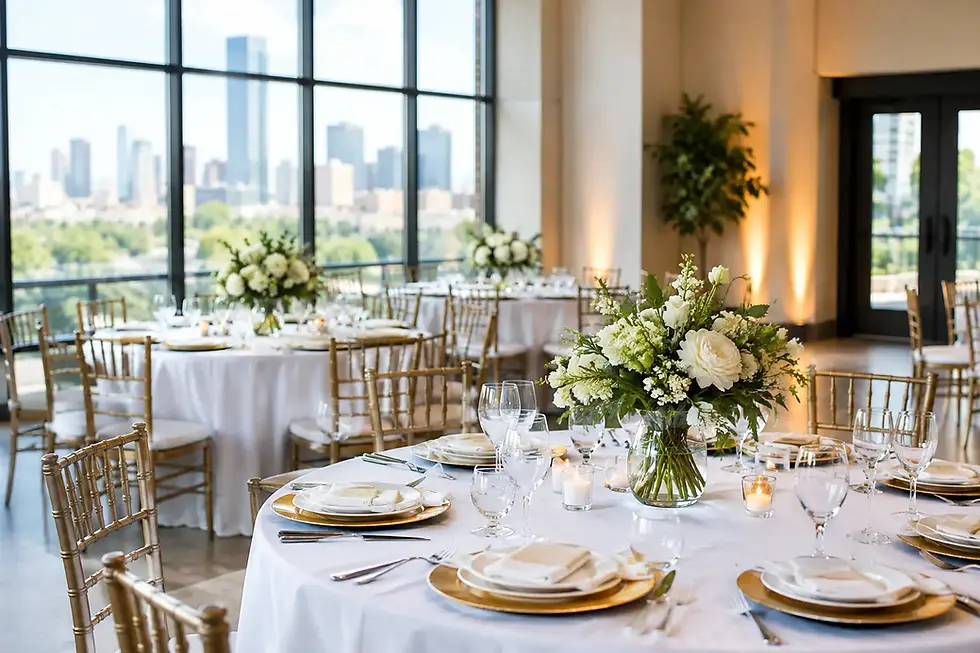
Tables should support conversation without blocking sightlines. Round tables often create a social, celebratory feel, while long banquet tables can bring drama and structure to a wedding or formal dinner. Cocktail tables encourage circulation and work well for networking events, but they may not be practical for guests who need a full meal or seating throughout the evening.
Leave room for the service team to work. Food and beverage service is smoother when servers have clear paths and guests are not constantly moving chairs to let people pass. This is one of the less visible choices that has a major effect on comfort.
Set the Mood With Lighting, Sound, and Color
Indoor venues give hosts greater control over the environment. Use that control thoughtfully. Lighting should adapt to the event rather than remain static from start to finish. Brighter, warmer lighting creates a welcoming setting for arrivals and dinner. More dramatic lighting can shift the room for dancing, entertainment, or a late-evening celebration.
Color should support the occasion without taking over the room. A corporate event may use brand colors in measured details such as screens, florals, linens, or a step-and-repeat. A birthday or mitzvah may embrace bolder color and themed decor. Wedding receptions often benefit from a layered approach, using a neutral foundation with color in flowers, candles, and personalized accents.
Sound deserves equal attention. Background music should allow conversation during cocktails and dining, while speeches need clean amplification. If a DJ or band is part of the event, discuss speaker placement and volume expectations with the venue. The goal is high energy where it belongs, without making it difficult for guests to connect.
Plan Food and Timing Around Real Guest Behavior
A memorable menu is not only about what is served. It is also about when and how guests receive it. If your event begins near a meal time, guests will notice delays quickly. A cocktail hour with substantial passed bites can keep people comfortable while photos or final setup details are completed. For a longer evening, build in a late-night option that matches the tone of the celebration.
Consider the guest mix when planning service. A formal plated meal can create a refined, coordinated experience, while stations may invite interaction and accommodate a wider range of preferences. Buffet service can work well for some gatherings, but it requires enough room and a thoughtful traffic flow to prevent long lines.
Create a realistic timeline that includes arrival, cocktails, meal service, speeches, entertainment, and a closing moment. Do not schedule every minute. The strongest event timelines have structure with breathing room. Guests need time to greet one another, visit a photo display, refresh a drink, and enjoy the setting without feeling rushed from one activity to the next.
Give Important Moments Room to Land
Toasts, presentations, candle lightings, first dances, and award announcements should not compete with meal service or a crowded bar. Pause service when attention is needed, make sure key speakers are comfortable with the microphone, and communicate the order of events to your venue team and entertainment professionals.
A short, well-timed program usually has more impact than a long one. Keep formal moments focused, then return guests to conversation, dining, or dancing. That balance is particularly important for mixed-age groups and corporate audiences, where preferences can vary widely.
Personalize Without Overcomplicating the Event
Personal touches make a private event memorable, but they do not need to fill every surface. Choose a few details that genuinely reflect the host, honoree, family, or organization. That might be a custom welcome sign, a meaningful photo display, a signature drink, curated music, branded visual elements, or a dessert that references a favorite tradition.
Focus your planning energy where guests will notice it most: the arrival, the focal point of the room, the food and beverage experience, and the final impression. When every detail has equal visual weight, the room can feel busy. A restrained design with a few confident moments often feels more premium.
Work With a Venue Team Early
The best venue teams ask practical questions because they know the small details determine how an event runs. Share your priorities early, including the guest count range, event schedule, entertainment plans, catering style, and any special traditions or program needs. This allows the team to recommend a room configuration and planning approach that supports your vision.
RAIN Events is built for this kind of personalized execution, offering a modern setting that can be tailored for intimate celebrations, large receptions, and polished corporate gatherings. A consultation should leave you with a clearer plan, not more uncertainty.
A successful indoor private event is not defined by how much you add to the room. It is defined by how confidently every element works together, giving your guests the freedom to celebrate, connect, and remember why they came.


Comments