


How to Design a Wedding Reception That Flows
A beautiful wedding reception is not defined by one dramatic centerpiece or a packed dance floor. It is defined by how the room feels when guests arrive, how easily they find their seats, and how naturally the celebration moves from cocktails to dinner to dancing. Knowing how to design wedding reception details around that guest experience helps every choice feel purposeful rather than simply decorative.
Begin With the Feeling You Want to Create
Before choosing linens, flowers, or lounge furniture, decide what you want guests to say about the reception when they leave. Perhaps you want a refined evening with candlelight and a formal seated dinner. Maybe the goal is energetic, social, and dance-forward, with a full room that feels alive from the first toast. Both can be memorable, but they require different layouts, lighting, service styles, and timing.
Write down three words that describe the atmosphere you want. Elegant, modern, warm, celebratory, intimate, dramatic, relaxed, or high-energy are all useful starting points. This small exercise gives you a filter for every later decision. If a design element is beautiful but does not support the atmosphere, it may not belong in the room.
Your guest count matters just as much as your style. A reception for 75 guests can feel spacious and conversational with generous table spacing. A celebration for 250 needs a more deliberate floor plan so the room still feels welcoming, not crowded. The best design does not fight the size of the party. It makes the guest count feel intentional.
Choose a Venue That Supports Your Reception Plan
A venue should give your wedding design room to work. Look beyond the overall appearance and consider what the space allows: flexible seating arrangements, an appropriately sized dance floor, places for cocktail hour, dependable audiovisual capabilities, and enough room for entertainment without blocking guest movement.
A large open space can be transformed for a formal reception, a lively band-led party, or a contemporary dinner-and-dancing format. The key is understanding where each moment will happen before committing to decor. At RAIN Events in Teaneck, couples can tailor a state-of-the-art event space to the scale and atmosphere of their reception rather than forcing their plans into a fixed layout.
Ask to see the room set for an event similar to yours. Photos of an empty venue are useful, but a floor plan reveals more. You want to know whether the bar creates a bottleneck, whether guests can reach restrooms without crossing the dance floor, and whether the couple's entrance has a clear focal point.
Build the Layout Around Guest Flow
The strongest wedding reception layouts make movement feel easy. Guests should understand where to go without needing directions at every turn. This is particularly important during transition points: arrival, cocktail hour, dinner seating, dessert, and the move into dancing.
Place the welcome moment where it is immediately visible. A clear escort-card or seating-chart display near the entrance prevents guests from clustering around tables later. If cocktail hour and dinner take place in the same room, use lighting, draping, furniture, or strategic table placement to create a noticeable change between the two experiences.
The dance floor deserves central consideration. It should be easy to access from dining tables, but it does not need to dominate the entire room from the start. A floor placed too far from guests can feel disconnected. One placed directly in a main traffic path can become frustrating once dancing begins. Ideally, guests can watch the celebration, join it quickly, and still move around the room comfortably.
Place Key Moments Where Everyone Can See Them
Your sweetheart table, head table, or couple's seating should have a natural view of the room. It does not have to sit on a raised stage, but guests should be able to see toasts, first dances, and special entrances without standing or craning around tall centerpieces.
Think carefully about the band, DJ, and speaker location as well. Great entertainment can lose impact when speakers point toward a wall or when the performer is hidden behind decor. Ask your venue and entertainment team to coordinate early so sound, lighting, and sightlines work together.
Design Tables for Conversation, Not Just Photos
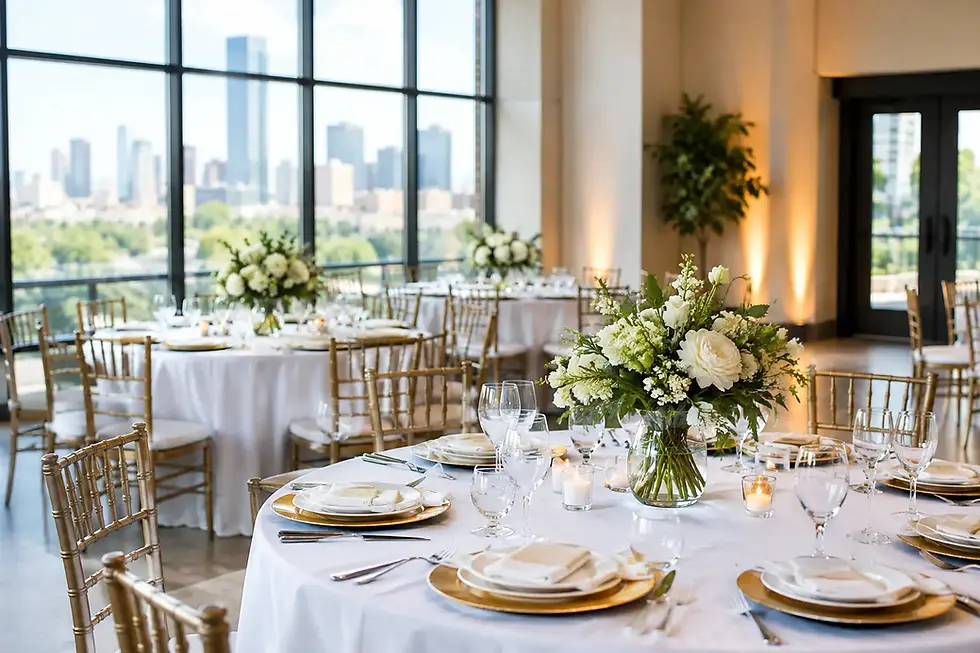
Tables take up most of the reception room, so they have a major effect on both the visual design and the guest experience. Round tables encourage conversation and create a classic reception feel. Long banquet tables can look dramatic and communal, especially for a more modern or garden-inspired setting. A mix of both adds visual interest, although it requires careful planning to keep service paths clear.
Centerpieces should complement the room without interrupting conversation. Low arrangements create an open, accessible feel. Tall arrangements can add scale and drama, but they need slender bases or transparent elements so guests can still see one another. If your reception includes a formal dinner, consider how flowers, candles, menus, and place settings will fit comfortably around the meal.
The same principle applies to specialty furniture. Lounge seating can make a large reception feel layered and welcoming, especially near the dance floor or cocktail area. Keep it out of primary walkways. A lounge should invite guests to settle in, not become an obstacle between dinner tables and the bar.
Use Lighting to Change the Entire Room
Lighting is one of the most effective ways to make a reception feel personal. It can make a modern venue feel warm, highlight architectural details, and shift the energy as the evening progresses. Yet lighting is often treated as a final add-on, after furniture and florals are already chosen. Plan it earlier.
Start with the practical requirement: guests need enough light to find their seats and enjoy dinner. Then add atmosphere. Candlelight, pin spotting on centerpieces, soft uplighting, and a focused wash of light on the dance floor can make the room feel polished without overwhelming it.
Color should support the mood, not distract from it. Soft amber lighting suits an elegant dinner reception, while richer color can build momentum during dancing. If you plan to use projected monograms, moving lights, or a high-energy entertainment setup, reserve those moments for later in the evening. The contrast between a calm dinner setting and a vibrant dance floor makes the party feel like it has a natural arc.
Plan the Reception Timeline Like a Host
A well-designed wedding reception is paced with intention. Guests should have time to greet one another, enjoy a drink, eat comfortably, and celebrate without long stretches of uncertainty. The exact timeline depends on your cultural traditions, meal format, entertainment, and guest count, but the rhythm matters in every format.
Cocktail hour should offer enough time for guests to settle in without losing momentum. Once dinner begins, keep formalities grouped thoughtfully. Too many interruptions between courses can slow service and make guests feel like they are waiting for the next announcement. On the other hand, placing every toast and special dance at the end can delay the dance floor too long.
Work with your planner, venue team, caterer, and entertainment professionals to identify the nonnegotiable moments first. Then build breathing room around them. If family photos run late, if a toast becomes emotional, or if guests are especially engaged on the dance floor, a flexible team can keep the evening moving without making the schedule feel rigid.
Make Food and Bar Service Part of the Design
Food service affects the room more than many couples expect. A plated dinner creates a formal rhythm and requires clear aisles for servers. Stations invite guests to circulate and can create a more social atmosphere, but they need thoughtful placement to avoid long lines. Family-style service feels generous and communal, though tables need more space for shared dishes.
The bar is another major gathering point. One bar may work beautifully for a smaller guest list. For a larger reception, additional service points or a strategically placed specialty drink station can reduce lines and keep guests connected to the celebration. Consider the visual presentation, too. A well-designed bar area can become a focal point rather than a functional corner.
Do not overlook late-night service. A dessert display, coffee station, or late-night snack can give guests a reason to gather again after dancing. It is a small detail that often makes the reception feel especially considered.
Add Personal Details With Restraint
Personal details are what turn a polished reception into your reception. They may appear in a signature drink, a favorite song for an entrance, meaningful table names, family photos, cultural traditions, or a menu that reflects your story. The most effective details are integrated into the experience rather than placed around the room solely for display.
You do not need to personalize every surface. Too many competing signs, colors, favors, and decor moments can make a room feel busy. Choose a few details that guests will genuinely notice and remember. A thoughtfully written welcome sign, a meaningful ceremony-to-reception transition, and an excellent final song can have more impact than dozens of small additions.
The goal is not to copy a reception you saw online. It is to create a room that supports the way you want to celebrate - with comfortable guests, clear moments of connection, and enough flexibility for the joy of the evening to take over.


Comments